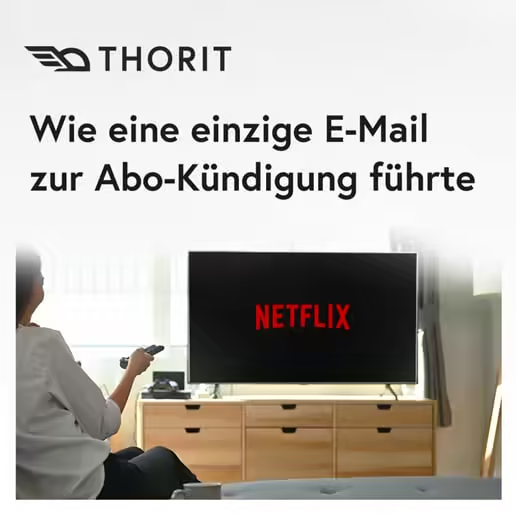
Or: what we can learn from Netflix even in this case. On 19 January 2022 I received an email from Netflix announcing price increases in Switzerland. I read the message, texted my husband, got his OK and cancelled our subscription. What had happened? Why was this email, in my view, a disaster for customer retention?

A true story. 20 April 2022, 6:30 in the morning. “Alexa, my daily briefing.”
“Netflix announces that it has lost 200,000 subscribers. The share price fell by 26 per cent as a result.”
Was there a cheerful undertone in there? Joking aside — the news put a sleepy smile on my face. Not because I wanted Netflix to fail, but because I had been keeping this blog post in a drawer for a while, wondering whether it was relevant or whether I was just an oversensitive marketer.
The subject line
“We’re updating our prices — and here is why.” It reminds me of clickbait: “This person is super-rich — and this is how they did it.” While I appreciated the honesty, this headline already produced a negative feeling. Who wants to be informed that something is getting more expensive? And the wording — updating! Do they expect me to run the price increase automatically in the background, like a Windows update? Or to click OK to accept new terms without reading the details? Fine, I read on, because I was curious about the promised reasons.
What is in it for me?
Then this: “Your membership is becoming more valuable — with stories that lift you up, move you, or simply make your day a little better.” That was it, the entire justification. At the end of the message I found images of films and series — the ones trending at that moment, which, apart from one, did not interest me. And that one film I had already watched. Shouldn’t Netflix know that? Netflix, of all companies, which advertises personalisation? Which promises to “refine your recommendations so you can watch even more series and films you love”?
Please, Netflix, you have my unreserved consent to point out by email that you are adding this fantastic science-fiction film or that wonderful travel documentary about my dream destination. Just for me. I expect nothing less from you — and yes, I am a big fan of the GDPR.
My neighbour gets a better price
The Swiss love looking across the border to understand whether there is a cheaper offer abroad. Although that is not possible in this case, it is still worth comparing. So I googled, and found that price increases for Netflix were being discussed worldwide following earlier adjustments in the US and Canada. I had missed that Netflix had already announced these for Switzerland a few weeks earlier. My mistake. On the other hand, a German magazine article published that very same day quoted Netflix as saying “price increases are country-specific”.
The magazine did not expect an increase in other countries for the time being (which later turned out to be a false assumption, but there we are). Netflix prices in Switzerland were already a good 25 per cent higher than in Germany. Why should we pay even more? Somehow I felt slightly ripped off.
The wrong message at the wrong time?
Even Netflix cannot predict what the virus will do or what a government will decide. But as a company that did great work during the crisis entertaining people — myself included — they might have paid more attention to what exactly was going on in the countries where they do business and communicate with customers.
Also on 19 January, the Swiss Federal Council announced, as expected, that it would extend the COVID measures for the moment but review them again on 2 February and probably lift some of them. Hooray, light at the end of the tunnel. Life was starting to return to normal. Like many others we made plans to go out with friends, to go to the gym more often — well, maybe not that — but in any case to do anything other than watch television in the evening. So: why not save a little each month at Netflix’s expense and enjoy a delicious starter in one of Switzerland’s excellent restaurants instead?
Call to action: please cancel
I read on. “Questions? You can find more information in our Help Centre or get in touch with us. You can also manage your membership at any time by visiting your account.” I very much appreciate that they mentioned this option — unlike other media where it takes you half an hour to work out how to cancel. That simple click drew me in magnetically. Did they want me to cancel? And then the next sentence: “Thank you for choosing Netflix.” It sounded like a goodbye. Because at that point I had already decided to leave.
If Netflix used the same approach in other countries, and other customers shared even a fraction of my thoughts, then it is no wonder Netflix lost so many of us. Still, I cannot quite believe this happened in the age of persona-specific messaging in digital marketing. Let us learn from it and do it much better — especially when it comes to explaining price increases and the value of our services.