Processes that run through without a nudge

Your processes are automated, up to the first system boundary. After that, an email takes over.

The problem

Automation usually ends at the boundary of the system it lives in.

Most companies have automation in place, but it ends at the boundary of the respective system. A case starts in the CRM, needs a piece of information from the ERP and a decision from the business side, and at that point it gets carried on by email. The process runs, but nobody can say where it stands.

The second break sits at the inputs. Classic workflows need structured data and fixed rules. Everything that arrives as free text, a document or a form attachment has to be read, understood and assigned by a person, and that is usually the start of the chain, not its end.

That is why automation initiatives often fail not on the standard cases but on the exceptions: because they are not planned for, the whole process falls back to manual work and the automation gets switched off.

If at least one of these points applies, an initial consultation is worthwhile.

Book a call
Hands placing a blank sticky note at the end of a chain of notes joined by arrows on a dark glass board.
How you notice it…

Processes start in the system and continue by email.
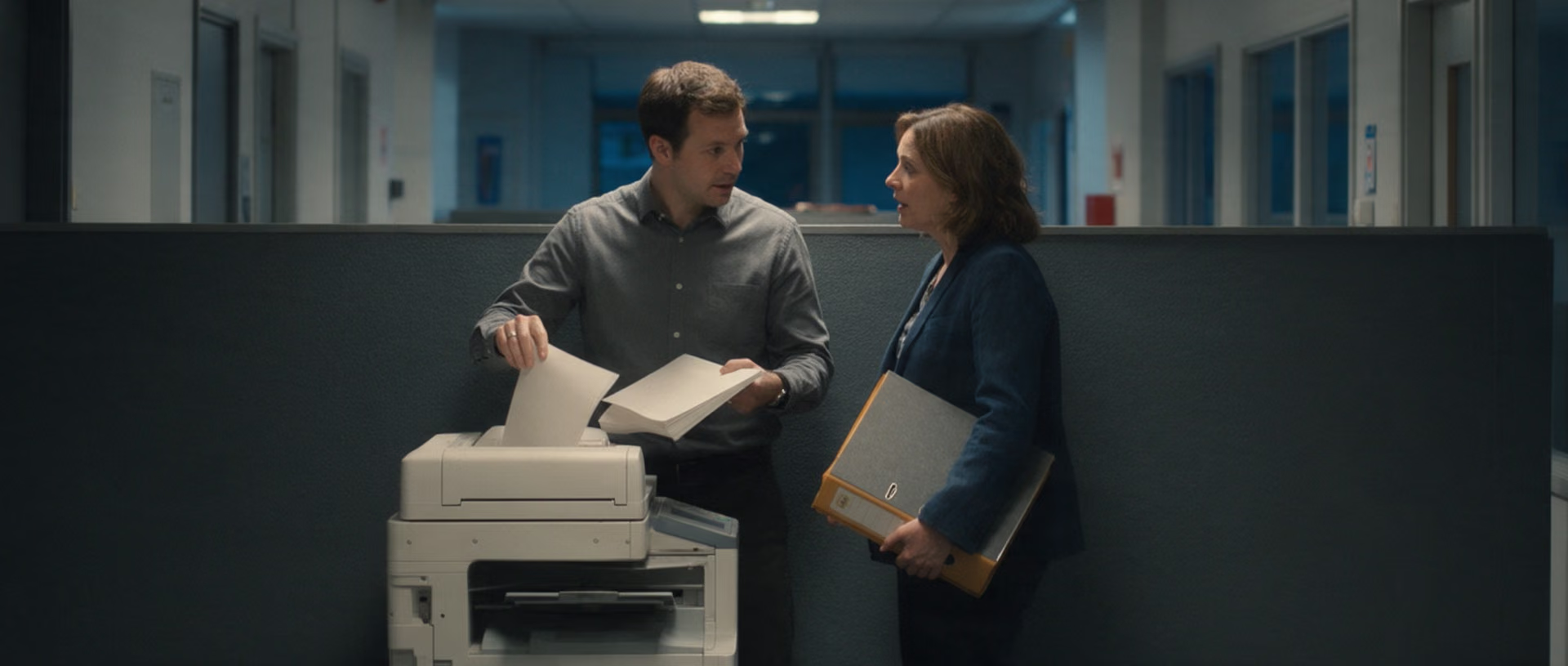
Two colleagues talk at a printer station in an office corridor after dark, one lifting a stack of sheets from the tray, the other holding a binder against her hip.
How you notice it…

Nobody can say where a case currently stands without asking around.

Close view of a man's hands sorting a stack of blank envelopes on a wooden post room bench in front of a dark pigeonhole shelf, a letter tray and a small document scanner beside them.
How you notice it…

Incoming mails and documents are sorted and assigned by hand.

A close view of two hands at a desk, one on a laptop trackpad, the other holding a pencil over a notebook of hand-drawn boxes and connecting lines.
How you notice it…

Existing workflows are switched off because they did not know the edge cases.
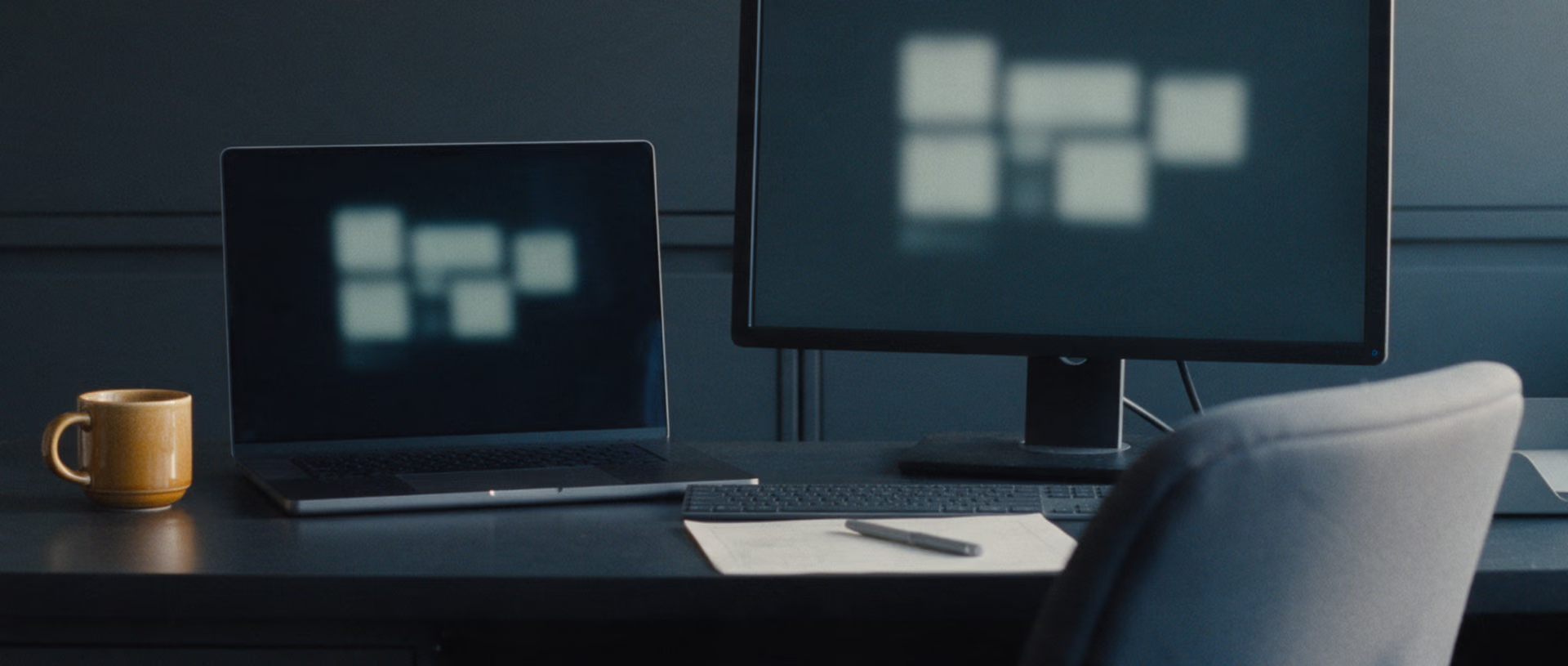
An unoccupied desk with an open laptop and a monitor side by side, both screens showing the same arrangement of blurred blocks, a mug at the corner and a letter tray at the right.
How you notice it…

The same data is entered in two systems just to keep the process moving.

The result

One run from intake to completion, exceptions included.

01

A run without bridges

From intake to completion in the system, even when several systems are involved.

02

Unstructured input understood

Mails, documents and free text get assigned and prioritised instead of being read.

03

Status visible at any time

Where a case stands is in the system, without asking a colleague.

04

Exceptions planned for

Uncertain cases go to people with context and flow back as learning cases.

How it pays off

The waiting time is the lever, more often than the handling time.

The lever is less often the handling time than the waiting time. A case that costs five minutes of work but sits in inboxes for two days causes its costs while sitting: queries, lost enquiries, delayed invoicing.

So the calculation runs on two tracks: saved working time per case and shortened cycle time. The second figure is usually the more valuable one and gets overlooked most, because it appears in no cost centre.

Add an effect that is hard to quantify but easy to observe: processes that run through reliably stop being worked around. Which means the data everything else builds on is right again.

FAQ

Frequently asked questions: AI Workflow Automation

Where exactly does AI come in?

Only where fixed rules are not enough: understanding unstructured input, assigning requests, setting priorities. Everything rule-based stays classic automation, which is cheaper, faster and easier to trace.

How traceable are the AI steps?

Every step logs input, decision and rationale. Uncertain cases are not guessed but escalated; you set the threshold for that.

Do we need a new platform for this?

Usually not. Workflows run as close as possible to the existing platform, complemented by orchestration where several systems are involved.

What happens to the edge cases?

They are part of the design, not its enemy: uncertain cases go to people with context and get evaluated. When the same exceptions pile up, the workflow gets extended.

Where do we start?

With a process that runs often and breaks at a system boundary today. Which one that is, the Discovery Workshop settles.

first step

The first step towards an agent-native company.

In the Enterprise Discovery Workshop we develop a clear target picture and a business case that holds up, in a matter of days. Fixed price, no open-ended day rates.

Smiling man in a dark blue suit in a bright office.
Rather talk first?
We get back to you personally.
Request a workshop
bg-leftright-cta