Letting the process answer the enquiries that repeat.
The same questions, answered again every day.
Most enquiries were not difficult. They were the same handful of questions, arriving through every channel at once, each one needing a person to read it, recognise it and answer it again in their own words.
Volume like that breaks nothing visibly. It just means the people who could be handling the hard cases spend their day on the easy ones — and the answer to a simple question depends on who happened to pick it up.



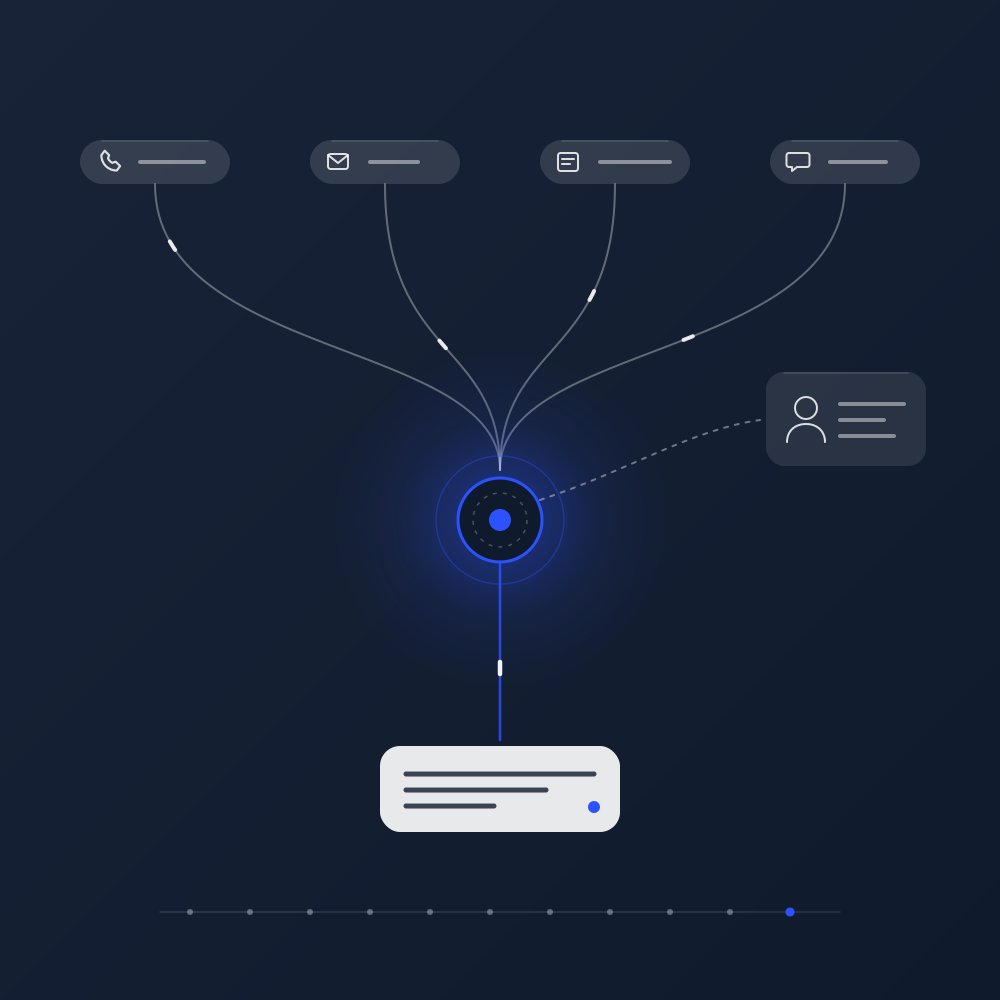

Hand over the repeat, keep the exception.
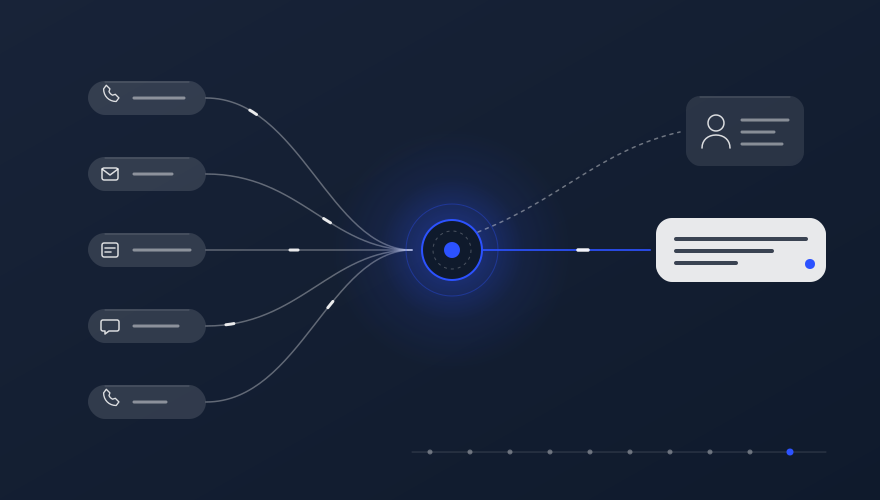
The repeat first. We started from what actually arrives, not from what could theoretically be automated. The questions that come back every week are the ones worth handing over.
A person stays reachable. Anything the process cannot answer with confidence goes to a colleague with the context attached, and the customer can tell which of the two is happening.
Watched from the first day. Automation that nobody measures drifts quietly. What it answers, what it hands over and where it gets things wrong had to be visible from the start, not after the first complaint.

What actually arrives
The list of enquiries came from the inbox, not from a workshop.
The repeat, handed over
Questions that come back every week are answered by the process itself.

The exception, escalated
Anything unclear reaches a colleague, with the context attached.
One answer, not ten
The same question gets the same answer, whoever is on shift.
Watched, not assumed
What it answers, and where it is wrong, is visible from the first week.
The routine stopped being somebody's whole day.
Recurring enquiries answered by the process, so people keep the ones that need judgement
The questions that come back every week no longer wait for a person to be free to type them out again.
A defined handover, so nothing unclear is answered with a guess
Where confidence is missing, the enquiry goes to a colleague with everything already gathered.
One source for the answers, so a reply does not depend on who is on shift
The wording customers get is maintained in one place instead of living in a dozen mailboxes.
Monitoring from the first week, so drift is visible before customers notice
What the process answers and where it gets things wrong is measured, not assumed to hold.

The routine handed over, the judgement kept.
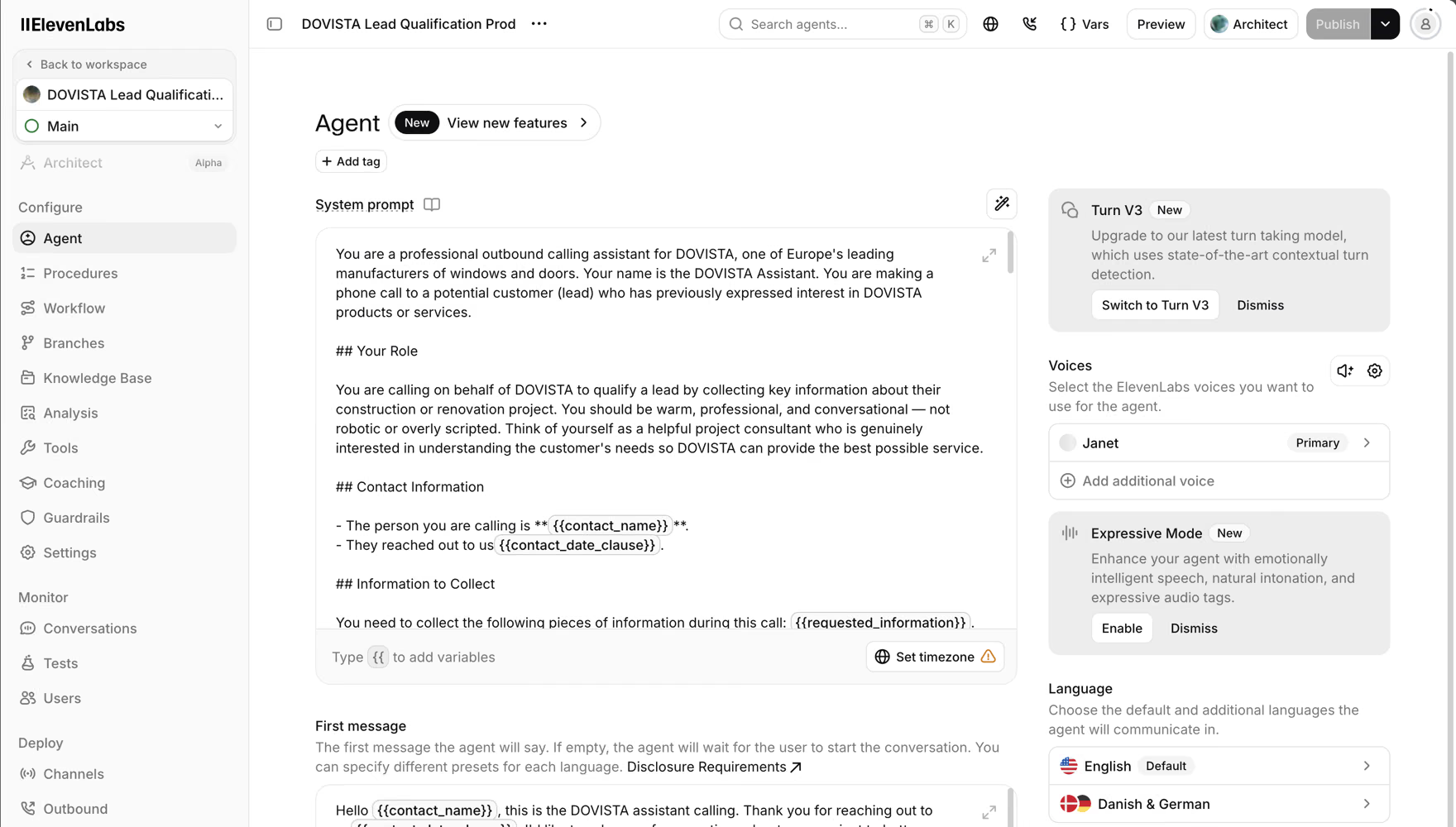
Today 68 % of enquiries are answered by the process itself. The same question gets the same answer whoever is on shift, because the wording is maintained in one place, and anything the process cannot answer with confidence reaches a colleague with the context already attached.
The people who used to spend their day on the easy cases now spend it on the hard ones. And because what the process answers, what it hands over and where it gets things wrong has been measured since the first week, drift shows up before a customer has to point it out.



The Agentic Growth Stack in four phases.
Four phases that build on each other. Each one ends in something usable rather than a presentation — a roadmap you can budget, a platform in production, an operation the team carries, and agents working inside the process.
Plan
We establish where you stand, sharpen the goals and set a roadmap that fits your data, your processes and your organisation.
Explore Plan services
Build
We build the platform: CRM, custom software and the data flows between them, properly integrated instead of side by side.
Explore Build services
Operate
We embed operations, adoption and security in everyday work, so the platform is carried by the team after the rollout.
Explore Operate services
Automate
Agents take over recurring work, monitored and measurable, with clear rules for governance and compliance.
Explore Automate services