



AI Workflow Automation

End-to-end processes across system boundaries, with AI exactly where fixed rules are not enough: understanding unstructured input, assigning it, prioritising it.

A woman in a grey jumper feeds a stack of paper into a document scanner on a cabinet in an office corridor, an orange folder beside it.
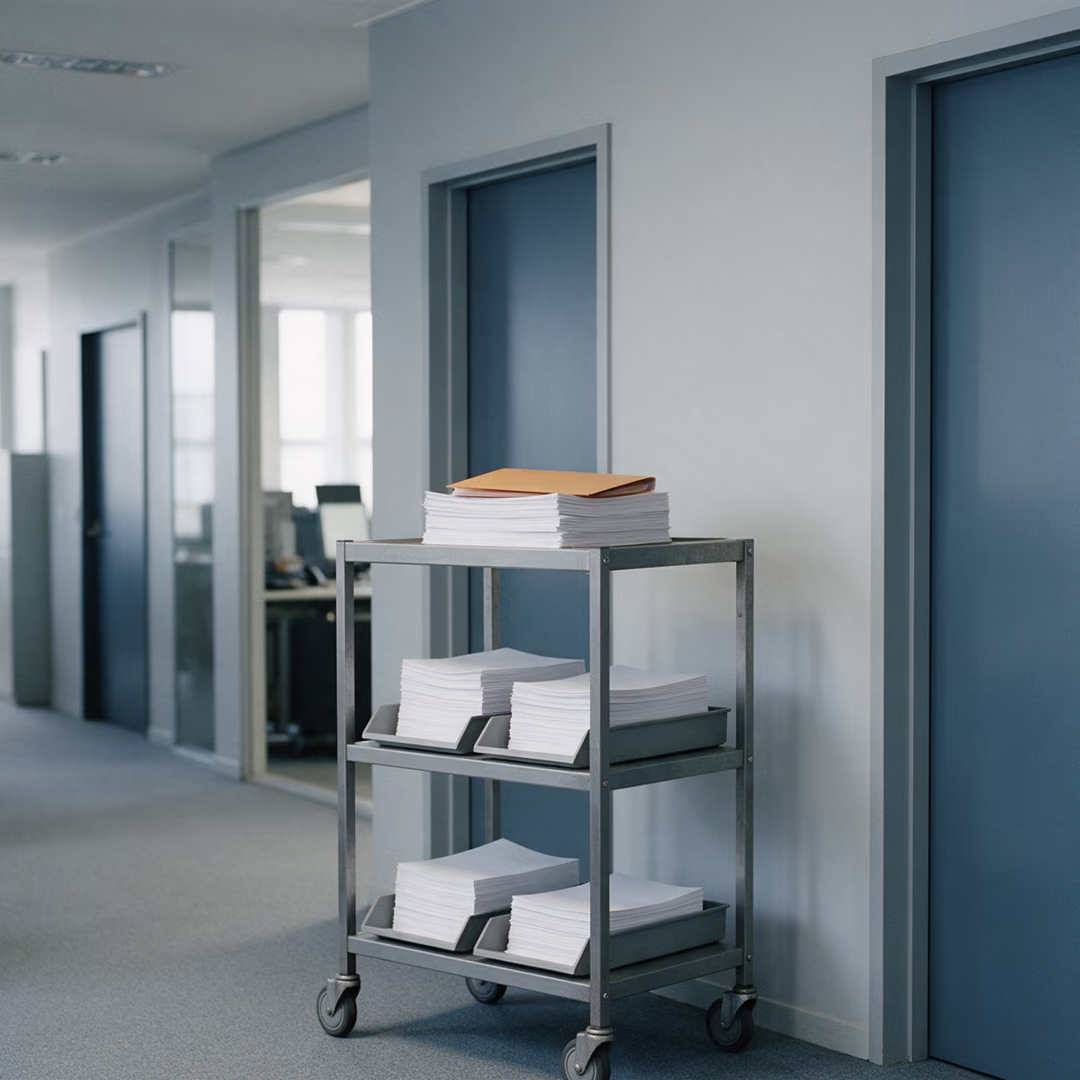
A hand rests on a stack of envelopes on a wooden counter in front of a wall of dark pigeonholes with a grey tray beside it. A steel document trolley with trays of paper stands in an office corridor between two blue doors, an orange folder on the top stack. Hands at a laptop by a window, one on the trackpad and one holding a pen over a single blank sheet, an orange mug at the edge of the desk.
What we look at

From a broken chain to a process that runs through.

Rules where rules are enough

Classic automation is cheaper, faster and more traceable than AI. We use AI steps only where input is unstructured or decisions need context.

We think processes end to end

A request that is classified automatically but carried onward by hand is not an automated process. The chain runs from intake to completion, across system boundaries.

Exceptions are part of the design

Whatever the workflow cannot decide with confidence goes to a person with context, and flows back as a learning case. That is how the automation rate grows in operation.

What you receive

Four parts of an automated process.

End-to-end processes

Automated from intake to completion, without manual bridges between systems.

AI steps in moderation

AI exactly where rules end: understanding, assigning, prioritising, traceably logged.

Cross-system orchestration

CRM, ERP and specialist systems work together in one flow, on the integration architecture.

Exception handling

Uncertain cases go to people with context and flow back into the workflow as learning cases.

FAQ

Frequently asked questions about AI Workflow Automation

How is this different from classic workflows?

Classic workflows need structured input and fixed rules. AI steps extend them with what used to be manual: understanding unstructured emails, assigning requests, setting priorities, all in the same flow.

Where does the automation run?

As close to the platform as possible: workflows in HubSpot, extended by orchestration across system boundaries where several systems are involved. The data flows follow the integration architecture.

How traceable are AI decisions in a process?

Every AI step logs input, decision and reasoning. Uncertain cases are not guessed but escalated, and you set the thresholds for that.

What happens to the special cases?

They go to a person with context and are evaluated as learning cases. When the same exceptions pile up, the workflow is extended. That is how the automation rate rises in operation rather than on paper.

How does this relate to the agents?

Workflows are the tracks, agents are the actors on them: an agent takes on whole tasks, a workflow connects the steps. Together they automate processes end to end.

Other Automate services

Three more services in Automate

If Automate is not the right starting point for you, explore the other phases of the Agentic Growth Stack as well.

AI Agents & Copilots

Agents that take on tasks instead of merely answering: qualifying leads, preparing quotes, resolving tickets.

Read more

Agent Monitoring & Optimization

What agents do is measured: quality, cost and escalations in view, with clear handovers to people.

Read more

AI Governance & Compliance

Guardrails for using AI: approvals, logging and traceability, built in from the start.

Read more
first step

The first step towards an agent-native company.

In the Enterprise Discovery Workshop we develop a clear target picture and a business case that holds up, in a matter of days. Fixed price, no open-ended day rates.

Smiling man in a dark blue suit in a bright office.
Rather talk first?
We get back to you personally.
Request a workshop
bg-leftright-cta