Building one careers solution for over 50 countries.
Fifty local answers, one page for everyone.
ZEISS makes optical systems and optoelectronics, turns over more than 10.8 billion euros a year and employs over 43,000 people in fifty countries. It asked for a relaunch. What it had was fifty markets that had each solved the same problem their own way, on numerous microsites that made the whole thing hard to scale.
A researcher wants to know if she can publish. A production specialist wants to know about shifts and the commute. A graduate has never heard of the company at all. All of them landed on the same page, which treated every visitor identically once they arrived.
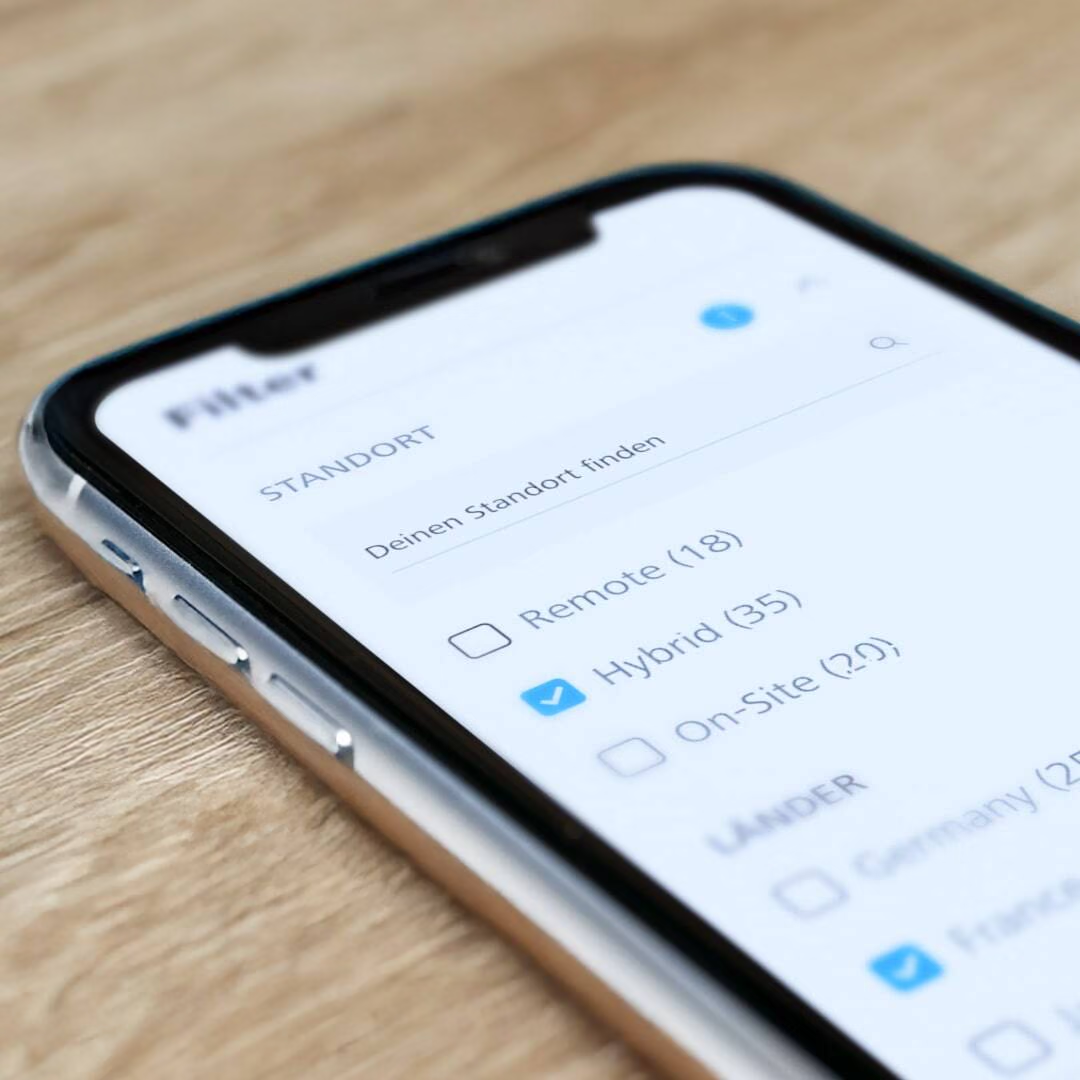



Three decisions before the first screen.
Country or language. Organise by language and there is less to maintain, but a candidate in Belgium gets an experience built for Paris. Organise by country and it fits, but every market becomes something to look after. We modelled both against how ZEISS actually hires and where the content is actually owned, then made the call before anyone drew a screen.
Four audiences, not one. Students, professionals, researchers and production staff got their own route in. Small change on a wireframe, large one for the person reading it.
Existing modules only. Every custom component is a promise that someone maintains it forever. Across fifty markets that is how good launches turn into local workarounds two years later.

Fifty local answers
Every market had solved the same problem its own way.

One page for everyone
A researcher, a production specialist and a graduate all landed in the same place.

Country or language
Modelled against how ZEISS actually hires, then settled before anyone drew a screen.

Four audiences, not one
Students, professionals, researchers and production staff each got their own route in.
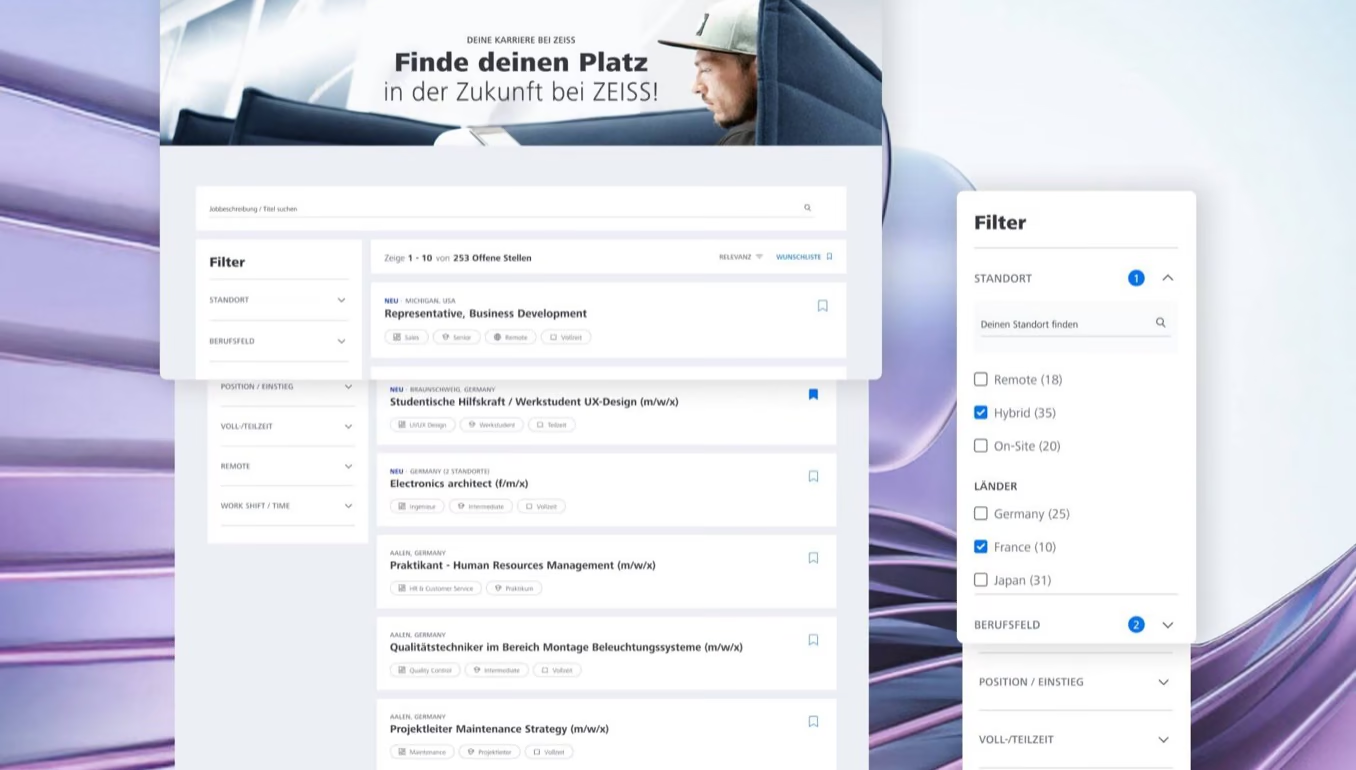
Existing modules only
Every custom component is a promise that someone maintains it forever.
Inside the existing system, not around it.
Entry paths, so each audience reaches relevant roles faster
Each group starts on a page written for them, so the first click narrows things down instead of widening them.
Navigation, with predictable depth that survives translation
Depth is capped and consistent, so a longer label in Finnish never pushes a menu into a shape nobody designed.
Role and content templates, so markets publish instead of improvising
Local teams fill in a structure that already works, rather than deciding for themselves what a role page needs.
Country and language handling, so a new market is a setting rather than a project
Opening a market means configuring one, so growth never has to wait for design or development capacity.

Fifty markets, one platform that fits each of them.
The relaunch left ZEISS with a modern, functional interface, navigation that guides rather than lists, a structure that gets candidates to the relevant information quickly, and content that is localised and accessible for every market.
Three things carried it: a detailed market and competitor analysis to identify the trends and best practices worth following, an iterative design and development process that kept adapting to what users needed, and a user-centred approach grounded in targeted UX analyses and testing.

The Agentic Growth Stack in four phases.
Four phases that build on each other. Each one ends in something usable rather than a presentation — a roadmap you can budget, a platform in production, an operation the team carries, and agents working inside the process.
Plan
We establish where you stand, sharpen the goals and set a roadmap that fits your data, your processes and your organisation.
Explore Plan services
Build
We build the platform: CRM, custom software and the data flows between them, properly integrated instead of side by side.
Explore Build services
Operate
We embed operations, adoption and security in everyday work, so the platform is carried by the team after the rollout.
Explore Operate services
Automate
Agents take over recurring work, monitored and measurable, with clear rules for governance and compliance.
Explore Automate services