
Putting one consent process behind marketing in over 60 countries.
The systems were all there. The connections between them were not.
PERI has built formwork and scaffolding systems since 1969, family-run from Weissenhorn, and has grown into a company of more than 9,200 employees operating in over 60 countries. It was digitising as it grew, and its marketing systems had not kept up: they were not sufficiently integrated, so the same work was done more than once and nobody had a full view of what a customer had actually done.
There were no automated processes for e-mail marketing or lead generation either, which put a ceiling on how far marketing activity could scale. For a business running in that many markets, that ceiling was low.







Consent first, then the campaigns.
One opt-in, globally. Double opt-in was settled as the way consent gets collected everywhere, rather than as something each market solves the week it wants to send a newsletter. It is what makes a contact usable, and it is easier to run one process than to check every market's own.
One data base, not several. The existing systems stayed in place, but they were integrated so that a contact and their interactions live together. Without that step, automated e-mail is mostly a faster way of sending the same message twice.
The team runs it afterwards. Requirements and objectives were defined in joint workshops with PERI, and the marketing team was trained to use and develop the platform itself. Managed services sit behind that rather than in place of it.

Workshops to define it
Requirements and objectives were set jointly before any system was touched.

Consent built in
The double opt-in processes were implemented in the systems themselves, not bolted on per market.

Templates, then segments
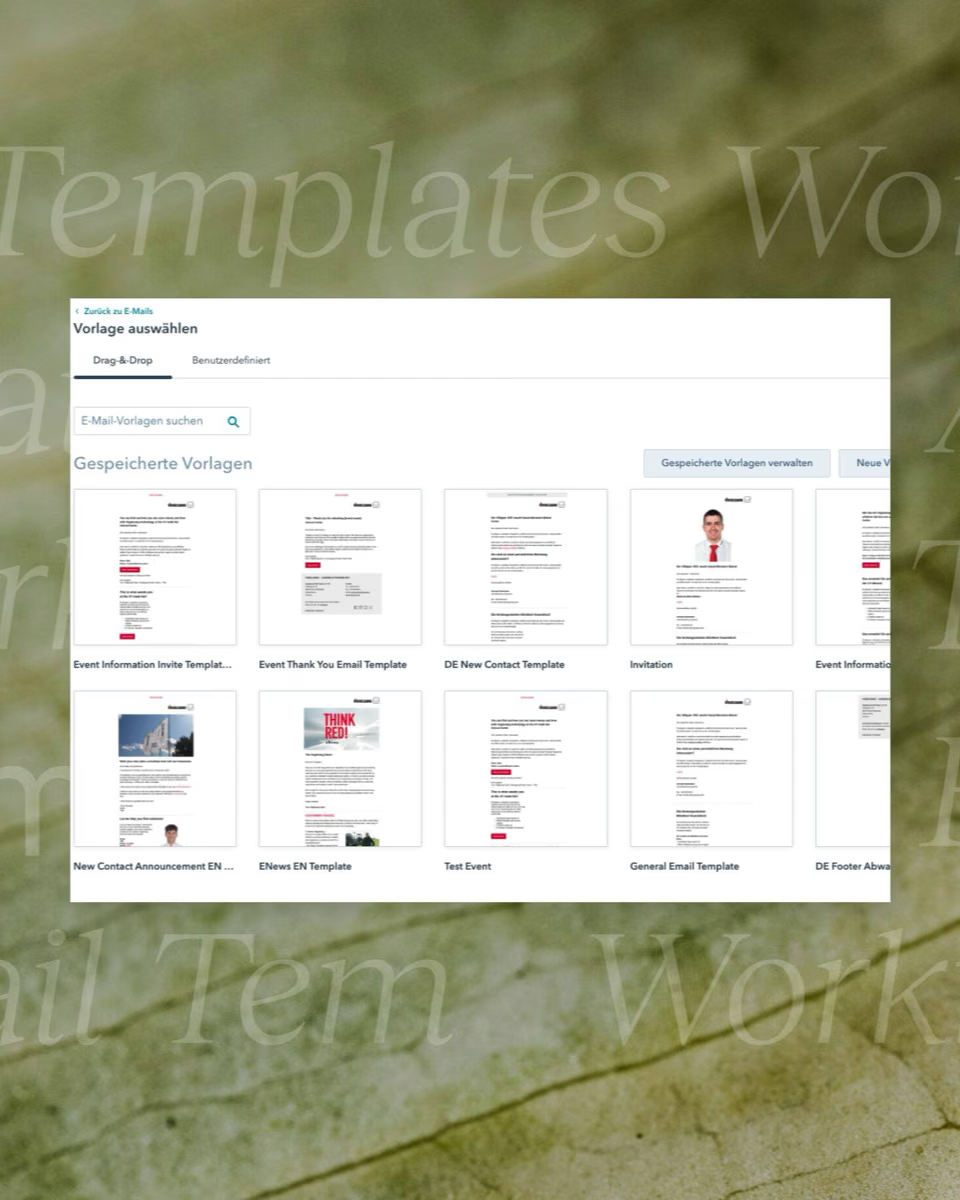
E-mail templates were created, campaigns automated and target groups segmented.

Onboarding the team
PERI's marketing people were trained to use the platform effectively themselves.

Support that continues
Continuous support and optimisation sit behind the team's own work.
Consent, contact data and e-mail stopped being three separate jobs.
Global double opt-in, so consent is collected the same way in every market
One process covers the countries PERI operates in. That is what makes a contact list usable, and what makes the permission behind it visible to the customer.
Existing systems integrated into one data base, so customer interactions are visible in one place
Nothing was thrown away and rebuilt; what was already running got connected, so a contact and their interactions sit together. The redundant workflows the old setup produced were the reason for doing it.
E-mail marketing automated, so campaigns run on templates and segments instead of by hand
Templates, campaign automation and audience segmentation replaced the manual send. That is the part that let the activity grow with the company.
The marketing team trained to run the platform, so it does not depend on us
PERI's team uses and develops it itself. Managed services provide continuous support and optimisation behind that, which is a different arrangement from being needed.

One consent process, and data worth automating against.
PERI came out of the project with global double opt-in processes in place, improved data quality and marketing activity that can scale. Consent, contact data and campaign delivery are one process now, not three that had to be reconciled afterwards.
Three things carried it: objectives defined early, which kept the work focused; regular coordination between PERI and Thorit; and deliberate training of the marketing team, which is what keeps a platform in use and developing once a project ends.




The Agentic Growth Stack in four phases.
Four phases that build on each other. Each one ends in something usable rather than a presentation — a roadmap you can budget, a platform in production, an operation the team carries, and agents working inside the process.
Plan
We establish where you stand, sharpen the goals and set a roadmap that fits your data, your processes and your organisation.
Explore Plan services
Build
We build the platform: CRM, custom software and the data flows between them, properly integrated instead of side by side.
Explore Build services
Operate
We embed operations, adoption and security in everyday work, so the platform is carried by the team after the rollout.
Explore Operate services
Automate
Agents take over recurring work, monitored and measurable, with clear rules for governance and compliance.
Explore Automate services